
That Frustrating Moment When Your Garage Door Won't Stay Closed
You press the button on your remote, watch your garage door start its descent, and then — just before it reaches the floor — it stops and reverses back up. You try again. Same thing. Maybe it works on the third attempt, maybe it doesn't. Either way, you're left standing in your driveway in Bloomfield Hills wondering what just happened.
This is one of the most common garage door complaints we hear from homeowners, and the good news is that it's almost always fixable. The tricky part is that several different issues can cause this exact same symptom. Let's walk through the most likely culprits so you can understand what's going on and decide whether it's a quick DIY fix or something that needs a professional touch.
Understanding Why Garage Doors Reverse
Before we get into specific causes, it helps to understand why your garage door is designed to reverse in the first place. Federal safety regulations require all automatic garage door openers to have a reversal mechanism. This is a critical safety feature that prevents the heavy door from closing on a person, pet, or object in its path.
Your opener uses two main systems to detect obstructions:
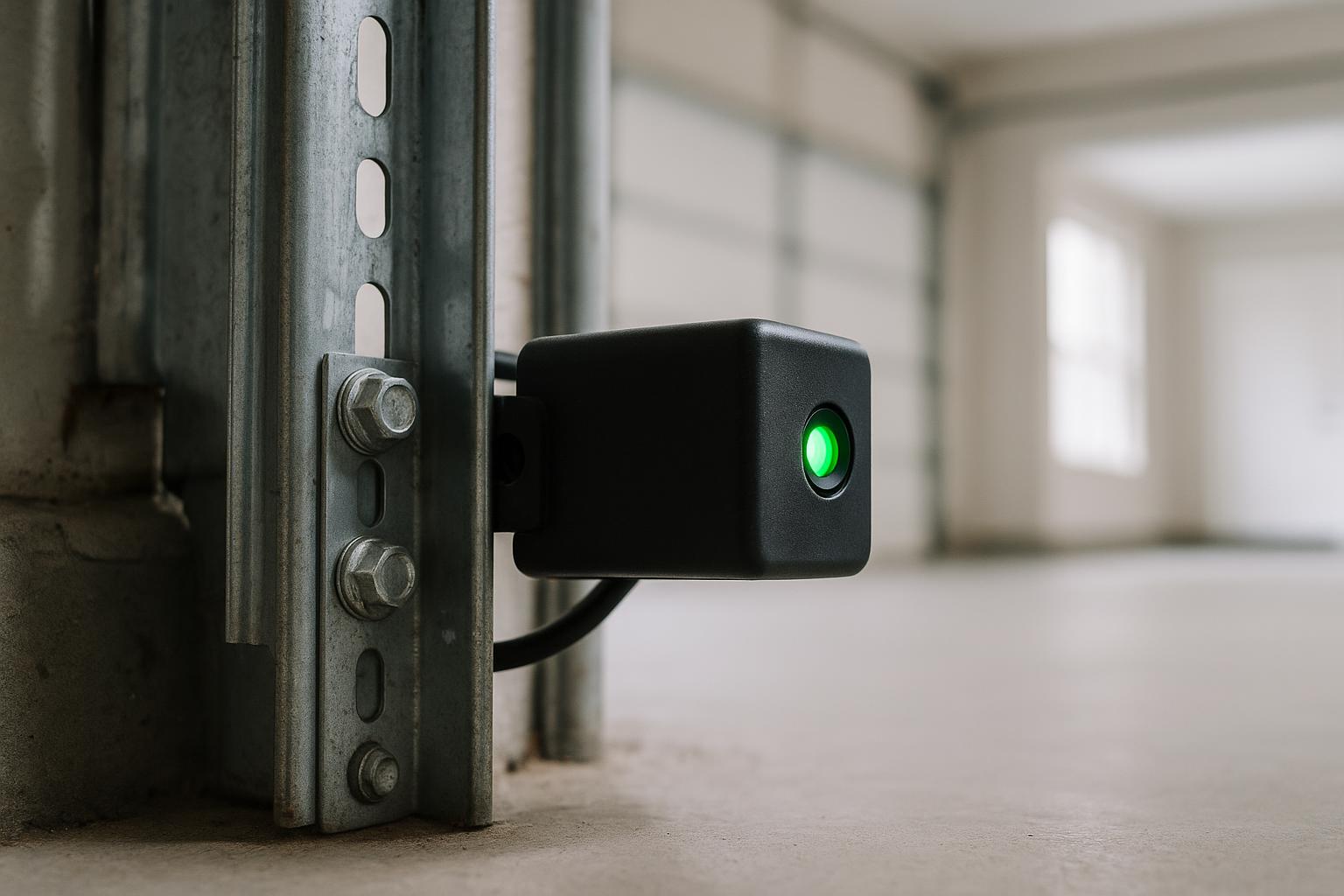
- Photo-eye sensors: Two small sensors mounted near the bottom of the door tracks on each side. They send an invisible beam across the opening, and if anything breaks that beam, the door reverses.
- Auto-reverse force settings: If the door encounters physical resistance while closing — like hitting an object or binding against the tracks — it's programmed to reverse direction.
When either of these systems is triggered incorrectly, your door reverses even though nothing is actually in the way.
The Most Common Causes
1. Misaligned Photo-Eye Sensors
This is the number one reason garage doors reverse prematurely, and it's often the easiest to fix. Those small sensors at the base of your door frame need to be precisely aligned with each other. If one gets bumped — maybe by a bike, a trash can, or even a child running past — the beam is broken and the door thinks something is in the way.
Check to see if both sensor lights are lit and steady. On most models, one sensor has a green light and the other has an amber or red light. If the green light is flickering or off, the sensors are likely misaligned. Gently adjust the sensor bracket until the light becomes steady again.
2. Dirty or Obstructed Sensor Lenses
Michigan weather doesn't do your garage door sensors any favors. Dust, cobwebs, moisture, and even condensation from our humid summers can coat the sensor lenses and block the beam. A simple wipe with a soft cloth can often solve the problem instantly. We recommend Bloomfield Hills homeowners make this part of their seasonal maintenance routine.
3. Incorrect Close-Force Settings
Your garage door opener has adjustable force settings that control how much resistance the door will push through before reversing. If the close-force setting is too low, the door may interpret normal friction as an obstruction and reverse. This can happen after temperature changes cause the metal tracks and springs to expand or contract, which is something we see frequently during Michigan's transitions between seasons.
Most openers have small adjustment screws or dials on the back or side of the motor unit, typically labeled "close force" or "down force." Turning the screw slightly clockwise increases the force. However, be cautious — setting the force too high can compromise the safety reversal feature. If you're unsure, it's best to have a technician handle this adjustment.
4. Damaged or Worn Tracks
If your garage door tracks are bent, dented, or have accumulated debris, the door can bind or stick as it travels downward. The opener interprets this resistance as an obstruction and reverses. Inspect your tracks visually for any obvious damage, and check for small rocks, leaves, or hardened grease buildup that could be causing friction.
5. Broken or Worn Cables and Springs
Your garage door's springs and cables do the heavy lifting — literally. They counterbalance the weight of the door so the opener doesn't have to work as hard. When a spring loses tension or a cable begins to fray, the door becomes heavier and harder to move. The opener struggles against this extra weight and may reverse because it exceeds the force threshold.
This is one cause you should never attempt to fix yourself. Garage door springs are under extreme tension and can cause serious injury if handled improperly. If you suspect a spring or cable issue, call a professional right away.
6. Track Alignment Issues
Over time, the vertical and horizontal tracks that guide your garage door can shift out of alignment. This is especially common in older homes throughout the Bloomfield Hills and Birmingham area where settling foundations can subtly change the geometry of the garage opening. When tracks are misaligned, the door may travel smoothly for most of its journey but catch or bind near the bottom, triggering a reversal.
7. Wiring Problems
Less common but still worth mentioning — damaged wiring between the sensors and the opener can send faulty signals. Rodents, lawn equipment, and general wear and tear can damage the low-voltage wires that connect your photo-eye sensors to the motor unit. If you've checked everything else and the problem persists, a wiring issue may be the culprit.
What You Can Safely Do Yourself
Some of these fixes are straightforward for a handy homeowner:
- Clean the photo-eye sensor lenses with a soft cloth
- Realign the sensors by gently adjusting their brackets
- Clear debris from the tracks
- Check for obvious obstructions in the door's path
- Make minor adjustments to the close-force setting (with caution)
When to Call a Professional
If the problem persists after trying the basic fixes above, or if you notice any of the following, it's time to bring in a garage door technician:
- Visible damage to springs, cables, or tracks
- The door appears crooked or uneven when moving
- You hear grinding, scraping, or popping noises
- The opener motor runs but the door doesn't move
- The problem is intermittent and you can't identify a pattern
Intermittent issues are especially frustrating because they're hard to diagnose without experience. A trained technician can test the force settings, inspect the mechanical components, and identify worn parts that might not be obvious to the untrained eye.
Preventing Future Reversals
Regular maintenance goes a long way toward preventing these kinds of issues. We recommend homeowners in Bloomfield Hills and the surrounding Oakland County communities schedule a professional garage door tune-up at least once a year. During a maintenance visit, a technician will lubricate moving parts, check spring tension, test safety features, tighten hardware, and inspect tracks and cables for wear.
Between professional visits, keep the area around your sensors clear, wipe the lenses periodically, and listen for any changes in how your door sounds when it operates. Catching small problems early almost always saves money compared to waiting for a full breakdown.
Get It Fixed Right
A garage door that won't close properly isn't just annoying — it's a security risk and an energy efficiency problem, especially during Michigan winters. If your door keeps reversing and you can't pinpoint the cause, Bloomfield Hills Garage Door is here to help. We'll diagnose the issue, explain your options with honest pricing, and get your door working reliably again. No guesswork, no surprises.