
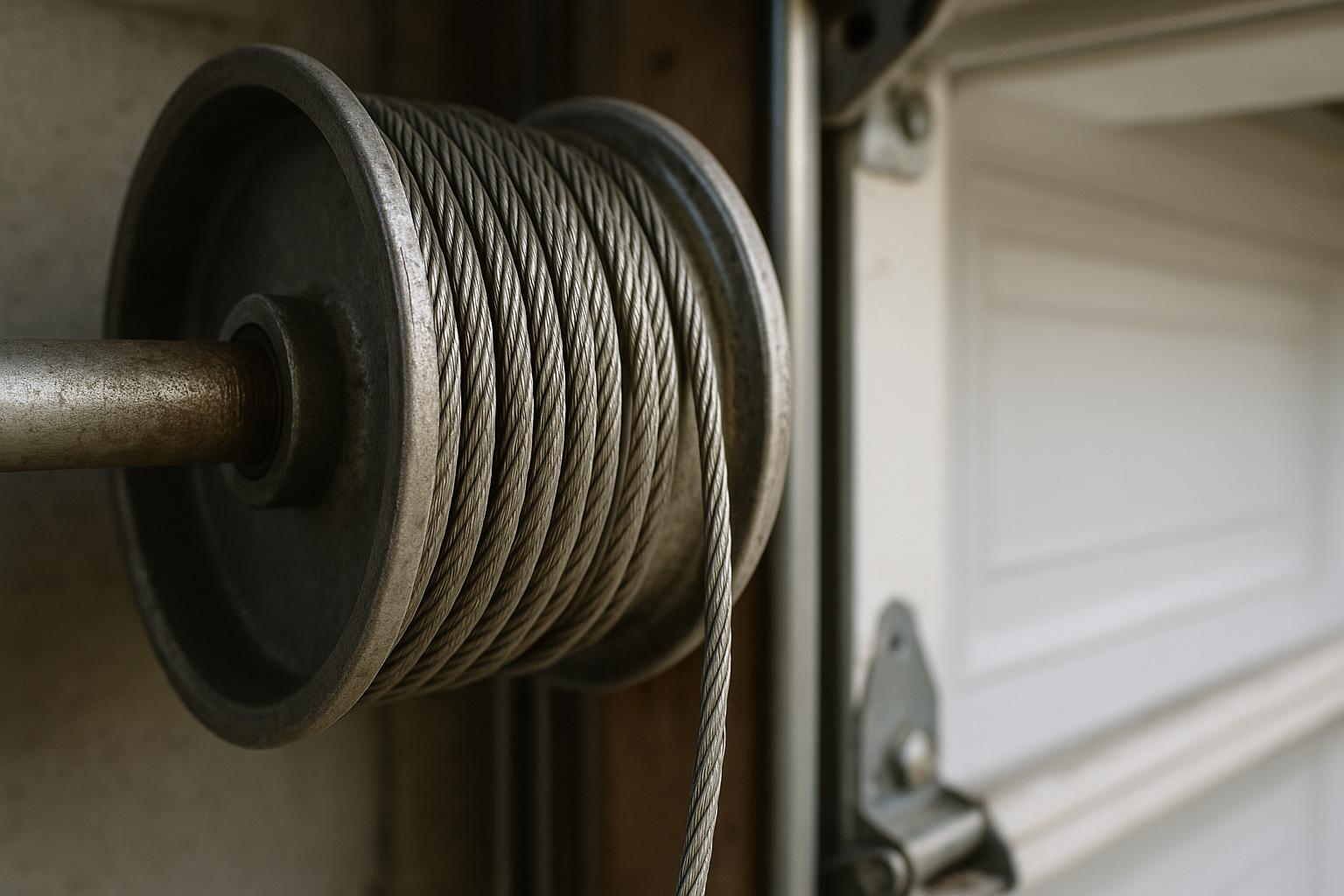
Your Garage Door Cables Do More Than You Think
Most homeowners don't think much about their garage door cables — until something goes wrong. But these steel cables are one of the most critical components of your entire garage door system. They work alongside the springs to bear the full weight of the door as it opens and closes, keeping everything balanced and controlled.
When a cable frays, loosens, or snaps, the results can be dramatic and dangerous. A garage door that weighs 150 to 300 pounds can slam down unexpectedly, fall off its tracks, or hang at a dangerous angle. For families in Bloomfield Hills who use their garage as a primary entry point — which is most of us — a cable failure isn't just an inconvenience. It's a genuine safety risk.
The good news is that cables rarely fail without warning. If you know what to look for, you can catch the problem early and get it fixed before anyone gets hurt or your door sustains serious damage.
How Garage Door Cables Work
Your garage door uses either torsion cables or extension cables, depending on the type of spring system installed. In both setups, the cables are attached to the bottom of the door and loop around a drum or pulley system. When the springs provide lifting force, the cables transfer that force evenly to raise and lower the door in a smooth, controlled motion.
Without functioning cables, the springs alone can't safely manage the door's weight. That's why even a single damaged cable can throw the entire system out of balance and create a hazardous situation.
Warning Signs That Your Cables Need Attention
1. Visible Fraying or Strands Coming Apart
This is the most obvious sign. Garage door cables are made of braided steel wire, and over time, individual strands can begin to unravel. If you see any fuzzy-looking areas, loose wire strands poking out, or sections where the cable looks thinner than it should, that cable is compromised. Even a small amount of fraying weakens the cable significantly and means failure could happen at any time.
2. The Door Hangs Unevenly
If your garage door looks crooked when it's partially open — one side higher than the other — there's a strong chance one of the cables has loosened or partially failed. This puts extreme stress on the remaining cable and the tracks, and it can quickly escalate into a much bigger repair if left alone.
3. The Door Drops Too Quickly When Closing
A healthy garage door closes at a steady, controlled pace. If yours has started dropping faster than usual or seems to fall the last few inches, the cables may not be maintaining proper tension. This is especially concerning because a fast-closing door can injure someone standing underneath it.
4. Loose or Slack Cables
With the door in the closed position, take a look at the cables on either side. They should be taut with no visible slack. If you notice a cable hanging loosely, looping, or sitting off its drum, something has shifted. Loose cables can jump off the drum entirely or get tangled in the spring mechanism, creating a complex and costly repair.
5. Grinding, Scraping, or Popping Noises
Unusual sounds during operation often point to cable issues. A cable that's come partially off its drum can scrape against the track or other hardware. You might also hear a loud pop if a strand breaks under tension. Any new or unusual noise from your garage door deserves investigation — don't just turn up the radio and ignore it.
6. Rust or Corrosion on the Cables
Here in Bloomfield Hills, our cables are exposed to moisture from rain, snow, and the general humidity that comes with Michigan's climate. Over time, this moisture can cause rust and corrosion that weakens the steel. If your cables look discolored, rough, or have visible rust spots, their structural integrity is compromised even if they haven't started fraying yet.
Why You Should Never Try to Fix Cables Yourself
We understand the temptation. There are plenty of DIY videos online, and the cables themselves don't look that complicated. But garage door cables are under enormous tension, and they're directly connected to the spring system — which is the single most dangerous component of your garage door.
A cable that snaps during a DIY repair attempt can whip with enough force to cause serious injury. And improperly installed cables can lead to the door falling unexpectedly, damaging your vehicle, your property, or worse.
This is one repair that should always be handled by a trained professional with the right tools and experience. It's not worth the risk to save a few dollars.
How Long Do Garage Door Cables Last?
Under normal conditions, garage door cables can last anywhere from 8 to 15 years. However, several factors can shorten that lifespan:
- Frequency of use: A door that opens and closes six or more times a day will wear cables faster than one used twice daily.
- Climate exposure: Moisture, salt, and temperature swings — all common in Oakland County — accelerate corrosion.
- Spring condition: Worn or improperly balanced springs put extra strain on cables, causing them to wear out sooner.
- Lack of maintenance: Cables that are never inspected or lubricated are more likely to fail prematurely.
If your garage door system is more than 10 years old and has never had the cables inspected, now is a good time to have a professional take a look.
What Happens During a Cable Repair
When you call a professional for a cable repair, here's generally what to expect:
- Inspection: The technician will examine both cables, the drums, the springs, and the tracks to assess the full scope of the problem.
- Tension release: The spring tension is carefully released to make the repair safe.
- Cable replacement: Damaged cables are removed and replaced with new ones rated for your door's weight and size. In most cases, both cables are replaced at the same time — if one has worn out, the other isn't far behind.
- Rebalancing: The door is rebalanced and tested to ensure smooth, even operation.
- Safety check: The technician will verify that the auto-reverse feature, tracks, and other components are all functioning properly.
The entire process typically takes about an hour, and it's one of the more affordable garage door repairs when caught early.
Don't Wait for a Cable to Snap
A broken garage door cable is one of those problems that's far easier and cheaper to prevent than to fix after the fact. When a cable snaps, it can damage your tracks, bend the door panels, or cause the door to crash down — turning a simple cable replacement into a much more expensive repair.
If you've noticed any of the warning signs we've described, or if it's simply been a while since your garage door had a professional inspection, don't wait. At Bloomfield Hills Garage Door, we provide honest assessments and straightforward pricing on all cable and track repairs. We serve homeowners throughout Bloomfield Hills, Birmingham, Troy, West Bloomfield, and the surrounding communities.
Give us a call to schedule an inspection. We'll let you know exactly where things stand — and if your cables are fine, we'll tell you that too. No pressure, no unnecessary upsells. Just reliable service from a team that takes your safety seriously.