
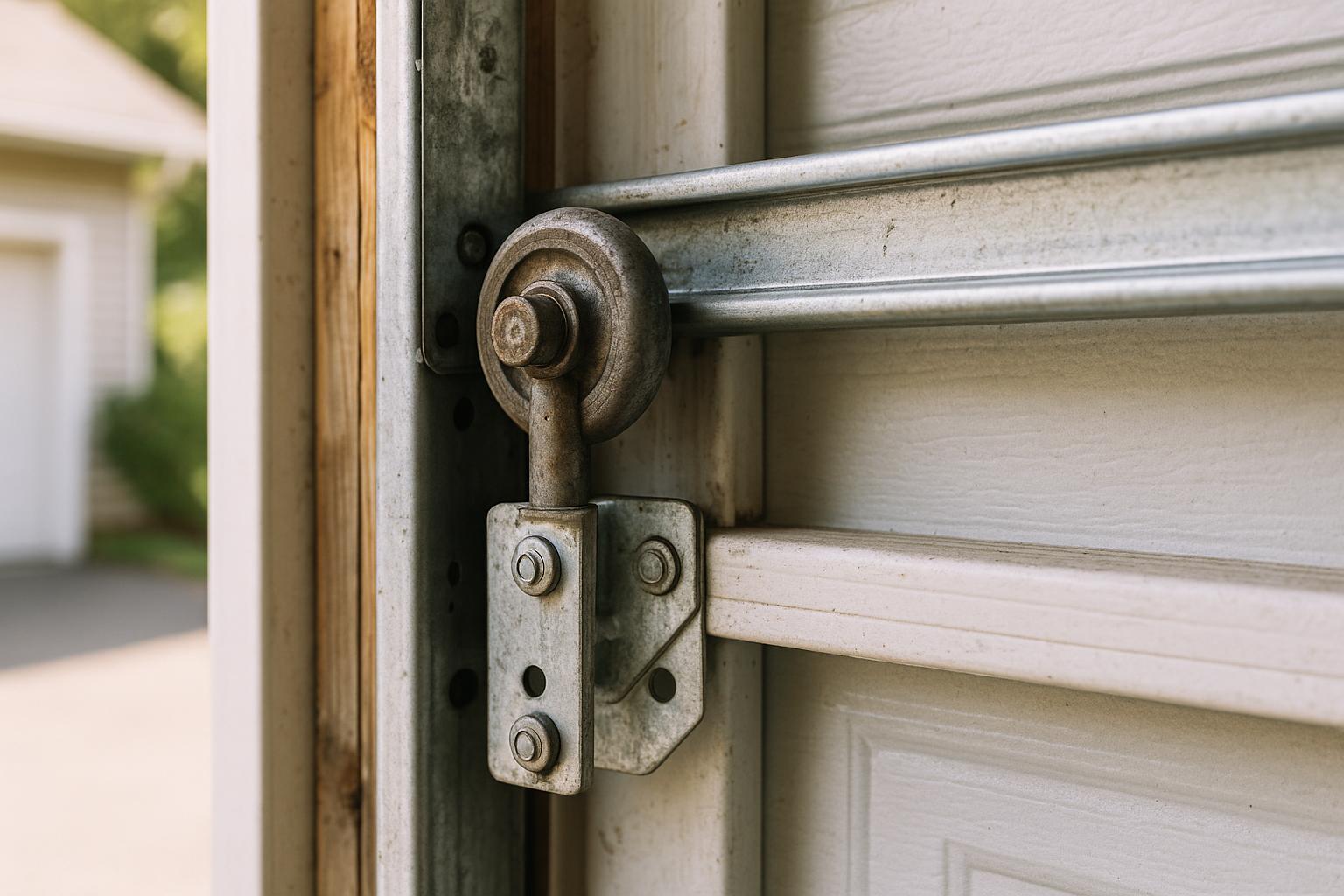
That Grinding Sound Isn't Normal
You press the button on your garage door opener, and instead of the smooth, quiet operation you're used to, you hear it — a loud grinding, scraping, or squealing noise that makes you wince every time. If your garage door has started making unusual sounds, you're not alone. It's one of the most common complaints we hear from homeowners in Bloomfield Hills and the surrounding Oakland County area.
The good news is that a noisy garage door doesn't always mean something catastrophic has happened. The bad news? Ignoring it almost always leads to a more expensive repair down the road. Let's walk through the most common causes of garage door grinding noises and what you should do about each one.
Lack of Lubrication
This is the single most common reason garage doors start making noise, and fortunately, it's also the easiest to fix. Your garage door system has dozens of moving metal parts — rollers, hinges, springs, and bearings — that need regular lubrication to operate smoothly.
Over time, especially through Michigan's extreme temperature swings, lubricant dries out or gets washed away. When metal grinds against metal without proper lubrication, you get that unmistakable scraping or squealing sound.
What to do: Apply a silicone-based or lithium-based garage door lubricant to the following parts:
- Hinges (where they pivot)
- Rollers (especially the bearings)
- Torsion springs
- The opener's rail or chain
Avoid using WD-40 as a long-term lubricant — it's a solvent and degreaser, not a true lubricant. It may quiet things down temporarily but won't provide lasting protection.
Worn-Out Rollers
Garage door rollers are small wheels that guide your door along the vertical and curved tracks. Most standard garage doors come with steel rollers, which tend to get noisy as they age. Over years of use, the bearings inside these rollers wear down, causing a grinding or rattling sound every time the door moves.
If you look at your rollers and notice they're visibly worn, chipped, or no longer spinning freely, it's time for a replacement. Many Bloomfield Hills homeowners choose to upgrade to nylon rollers, which are significantly quieter and don't require as much lubrication as their steel counterparts.
What to do: Roller replacement is a relatively straightforward job for a professional. We typically recommend replacing all rollers at once rather than one at a time, since they tend to wear at similar rates. If your door has bottom bracket rollers connected to the cable system, those should only be handled by a trained technician due to the high tension involved.
Misaligned or Damaged Tracks
Your garage door tracks need to be properly aligned for the door to travel smoothly. If a track gets bumped, bent, or shifts out of alignment, the rollers will scrape and grind against the track walls instead of gliding through them.
You can often spot track problems by looking at the metal tracks on either side of your door. Are there visible gaps between the rollers and the track? Does the track look bent or warped at any point? Do you see shiny scrape marks or metal shavings near the track?
What to do: Minor alignment issues can sometimes be corrected by loosening the track brackets and gently tapping the track back into position. However, if the track is bent or damaged, it usually needs to be replaced. Forcing a door to operate on a bad track can cause the door to jump off the track entirely, which is both dangerous and expensive to repair.
Opener Gear Problems
If the grinding noise seems to come from the garage door opener unit itself — the motorized box mounted to your ceiling — rather than from the door, you may have a stripped or worn gear inside the opener. This is especially common in chain-drive openers that have been in service for ten or more years.
A telltale sign of a gear problem is when you hear the motor running and a grinding sound, but the door doesn't move at all or moves only partially. The internal gears that transfer power from the motor to the drive mechanism have likely worn down to the point where they can no longer engage properly.
What to do: Gear replacement requires opening up the opener unit and swapping out the damaged gear assembly. While replacement gear kits are available, this repair involves working with the motor and drive components, so most homeowners prefer to have it done professionally. In some cases, if the opener is older, it may make more financial sense to replace the entire unit rather than repair it.
Loose Hardware
A garage door cycles up and down roughly 1,500 times per year in the average household. All that vibration gradually loosens nuts, bolts, and brackets throughout the system. Loose hardware can cause rattling, banging, and grinding noises that seem to come from everywhere at once.
What to do: Grab a socket wrench and tighten all the bolts on your door's hinges, track brackets, and opener mounting brackets. Be careful not to overtighten — you want them snug, not stripped. This simple step eliminates a surprising number of mystery noises.
When Grinding Noises Signal a Serious Problem
While many causes of garage door noise are minor, some grinding sounds indicate problems that require immediate professional attention:
- Grinding combined with the door being hard to lift manually — This could indicate a spring problem, which involves components under extreme tension.
- Grinding with visible door movement off the tracks — A door that's partially off its tracks is a safety hazard and should not be operated.
- Loud popping or snapping followed by grinding — This may mean a spring or cable has broken, and the door is operating under dangerous stress.
- Burning smell accompanying the grinding — This suggests the opener motor is overheating, possibly due to a mechanical obstruction or failing motor.
If you notice any of these warning signs, stop using the door and call a professional right away.
Preventive Maintenance Keeps Things Quiet
The best way to avoid grinding noises — and the repairs that come with them — is regular garage door maintenance. We recommend that homeowners in Bloomfield Hills and nearby communities like Birmingham, Troy, and West Bloomfield schedule a professional tune-up at least once a year. During a maintenance visit, a technician will lubricate all moving parts, inspect rollers and tracks for wear, tighten loose hardware, and test the balance and safety features of your door.
Think of it like an oil change for your car. A small investment in maintenance now prevents breakdowns and costly repairs later.
Don't Let a Noisy Door Become an Expensive Problem
A grinding garage door is trying to tell you something. Whether it's a simple lubrication issue or a sign of worn-out components, addressing the noise early almost always saves you money compared to waiting until something breaks.
If your garage door is making sounds that don't seem right, Bloomfield Hills Garage Door is here to help. We'll diagnose the problem, explain your options with honest pricing, and get your door running smoothly and quietly again. Give us a call to schedule a service appointment — we show up on time and stand behind every repair.