
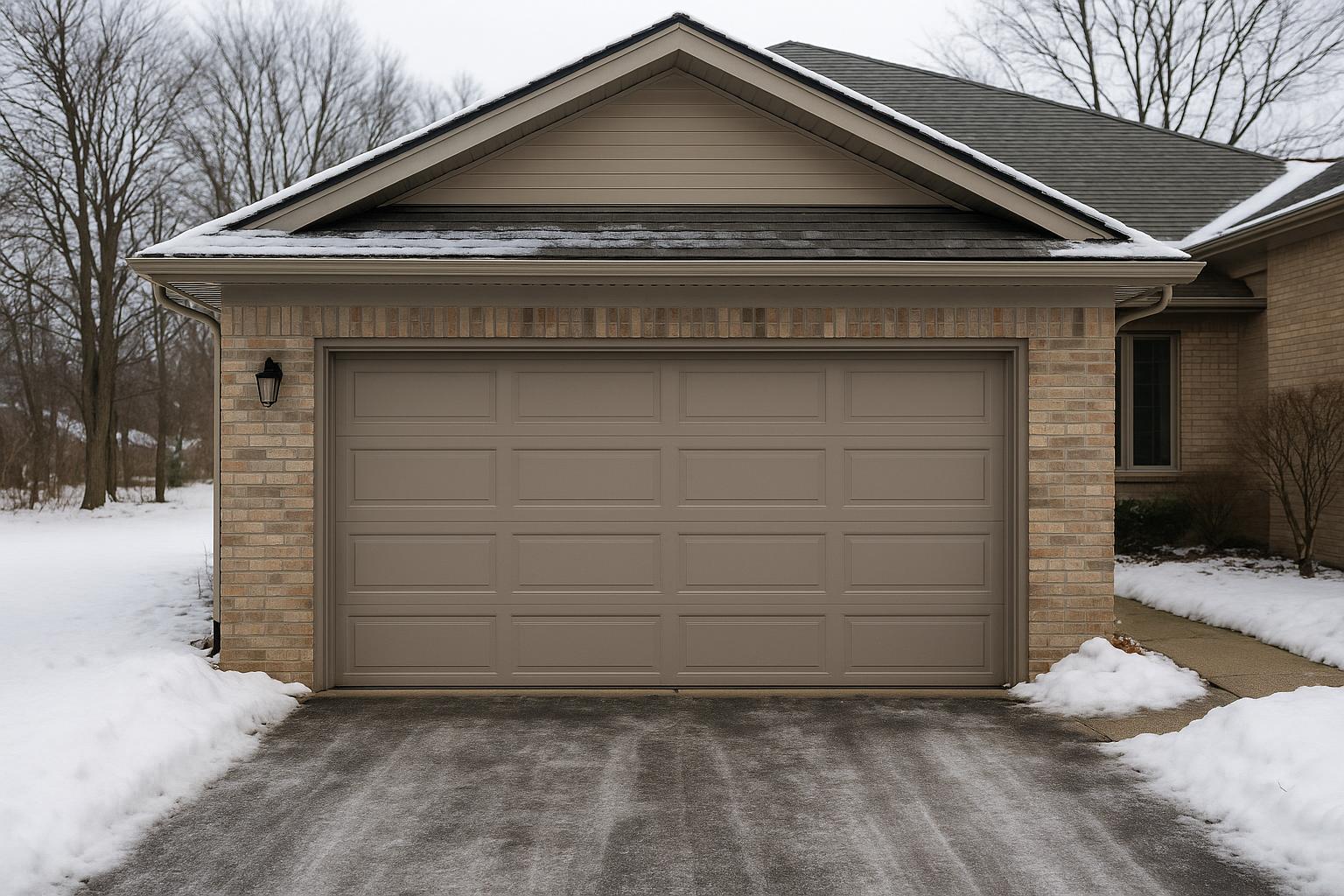
Winter Is Tough on Garage Doors in Michigan
If you've lived in Bloomfield Hills for even one winter, you know how brutal the cold can be. Temperatures regularly dip below freezing from November through March, and that kind of sustained cold doesn't just affect your heating bill — it can wreak havoc on your garage door system.
Every winter, we get calls from homeowners across Oakland County dealing with garage doors that won't open, make strange noises, or seem to struggle through every cycle. The good news is that most cold-weather garage door problems are preventable with a little knowledge and some seasonal maintenance.
Here's a breakdown of how freezing temperatures affect your garage door and what you can do to keep everything running smoothly all winter long.
Garage Door Springs Become More Brittle
Your garage door relies on torsion or extension springs to counterbalance its weight. These springs are under tremendous tension every time the door opens and closes. In cold weather, the metal in these springs contracts and becomes less flexible, making them more prone to snapping.
A broken spring is one of the most common garage door emergencies we see during Bloomfield Hills winters. When a spring breaks, the door becomes extremely heavy and may not open at all. Attempting to force it open — either manually or with the opener — can cause further damage or even injury.
What You Can Do
- Schedule a fall maintenance check. Having a professional inspect your springs before winter hits can catch wear and fatigue before a break happens.
- Listen for warning signs. If your garage door starts making loud creaking or popping sounds in cold weather, it could mean the springs are under extra stress.
- Never attempt to replace springs yourself. Spring replacement is one of the most dangerous garage door repairs and should always be handled by a trained technician.
Lubricant Thickens and Metal Parts Stick
The lubricant on your garage door's moving parts — including the rollers, hinges, tracks, and springs — can thicken or even harden in freezing temperatures. When this happens, the door may move sluggishly, make grinding noises, or put extra strain on the opener motor.
Metal components also contract in the cold, which can cause tracks to shift slightly or rollers to bind. You might notice your garage door jerking or hesitating as it moves along the track.
What You Can Do
- Use a silicone-based lubricant. Unlike standard WD-40 or petroleum-based products, silicone spray is designed to perform in low temperatures. Apply it to all moving parts before the first freeze.
- Wipe down the tracks. Remove any debris or old grease buildup from the tracks so the rollers can move freely.
- Re-lubricate mid-winter. If we hit a particularly cold stretch, a quick re-application of lubricant can make a noticeable difference in how smoothly your door operates.
Weatherstripping Cracks and Fails
The rubber weatherstripping along the bottom and sides of your garage door is your first line of defense against cold air, snow, and moisture. Over time — and especially in harsh Michigan winters — this rubber dries out, cracks, and loses its seal.
When weatherstripping fails, cold air pours into your garage, which can freeze pipes, damage stored items, and make any attached living spaces harder to heat. It also allows water and snow to seep under the door, which can lead to ice buildup on your garage floor.
What You Can Do
- Inspect your weatherstripping each fall. Look for visible cracks, gaps, or sections that have pulled away from the door.
- Replace damaged sections promptly. Weatherstripping is relatively inexpensive and can save you money on energy costs while protecting your garage from the elements.
- Check the threshold seal too. A garage door threshold seal along the floor adds an extra barrier against drafts and water intrusion.
Your Garage Door Opener Works Harder
Cold weather affects your garage door opener in two ways. First, the opener motor has to work harder to move a door that's stiff from thickened lubricant and contracted metal parts. Second, if your garage isn't heated, the opener unit itself is operating in freezing conditions, which can reduce its efficiency and lifespan.
Homeowners in Bloomfield Hills and surrounding areas like Birmingham and Troy often notice that their opener seems louder or slower during the winter months. In some cases, the opener may fail to fully open or close the door, triggering the safety reverse feature.
What You Can Do
- Keep the door well-maintained. The easier the door moves mechanically, the less strain on your opener motor.
- Check the opener's force settings. If the door is struggling, your opener may need a slight adjustment to its force settings. However, be cautious — increasing the force too much can override important safety features.
- Consider upgrading an aging opener. If your opener is more than 10-15 years old and struggling in the cold, a newer model with a more efficient motor and better cold-weather performance may be a worthwhile investment.
The Door Freezes to the Ground
This is a classic Michigan winter problem. After a freeze-thaw cycle or a wet snowfall, water can pool at the base of your garage door and freeze overnight, essentially gluing the door to the ground. If you hit the opener button without realizing the door is frozen down, you can strip gears in the opener, snap cables, or damage the bottom panel of the door.
What You Can Do
- Clear snow and water from the base of the door. After a storm, shovel or sweep away any accumulation along the bottom seal.
- Use a de-icing product carefully. Rock salt can damage concrete and metal, so opt for a calcium chloride-based de-icer along the door's threshold.
- Try to break the seal gently. If the door is frozen, try tapping along the bottom with a rubber mallet or using a heat gun on a low setting. Never force the door open with the opener.
A Pre-Winter Tune-Up Makes All the Difference
The single best thing you can do to protect your garage door from cold-weather problems is to schedule a professional maintenance visit before winter arrives. A trained technician can inspect your springs, lubricate all moving parts, test your opener, check your weatherstripping, and identify any small issues before they turn into expensive emergency repairs in January.
At Bloomfield Hills Garage Door, we help homeowners across Bloomfield Hills, West Bloomfield, Southfield, Rochester Hills, and the greater Oakland County area prepare their garage doors for winter. We've seen every cold-weather problem in the book, and we know how to keep your door running reliably no matter what Michigan throws at us.
If your garage door is already showing signs of winter wear — or if you just want peace of mind heading into the colder months — give us a call to schedule a maintenance appointment. We show up on time, provide honest pricing, and stand behind every job we do.